
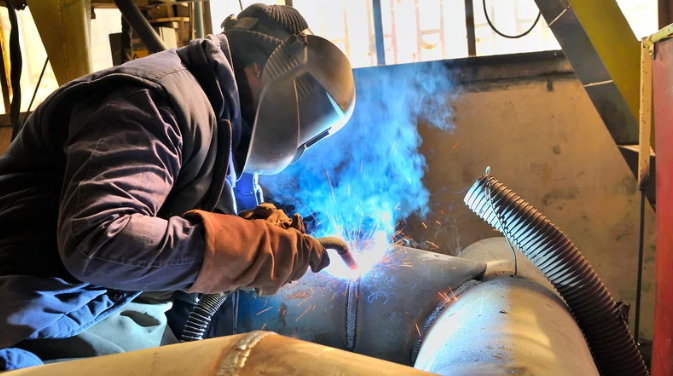
Effective removal of harmful airborne contaminants in a welding environment hinges on a critical factor: capture velocity. This is the minimum speed of air required at the fume source to draw particles into the extraction hood before they escape into the facility. Without sufficient capture velocity, a ventilation system fails its primary purpose, leaving workers exposed to dangerous substances. Properly engineering an industrial welding fume extractor system means calculating this velocity precisely. Relying on professional expertise ensures the system is powerful enough to protect your team and maintain a safe, compliant workspace.
The Science Behind Effective Fume Capture
Capture velocity is the force that overcomes the natural upward movement of hot welding fumes. The plume of smoke and particulate rises due to thermal buoyancy, and the extractor’s airflow must be strong enough to redirect it into the system. Professionals determine the necessary velocity, measured in feet per minute (FPM), based on several factors. These include the welding process, the toxicity of the materials used, and the ambient air currents within the facility. A system without the correct velocity is merely moving air, not cleaning it.
Why Professional Calculation is Essential
Determining the right capture velocity is not a simple matter of guesswork. It requires a deep understanding of fluid dynamics and occupational safety standards. Professionals consider the distance between the capture hood and the welding arc, the hood’s size and shape, and the characteristics of the fume plume. For instance, high-temperature processes generate fumes that rise faster, requiring a higher capture velocity. An improperly calculated system will fail to contain these contaminants, leading to poor air quality and potential health hazards for everyone in the building.
The Connection Between Velocity, Safety, and Productivity
A properly designed extraction system directly impacts workplace safety and operational efficiency. When capture velocity is adequate, the air in the breathing zone of the welder remains clean, drastically reducing the risk of respiratory illnesses and other long term health issues. This commitment to safety fosters a better work environment and improves employee morale. Moreover, it demonstrates how fume extraction at the workplace can boost your business by enhancing overall productivity and minimizing health-related absenteeism.
Avoiding the Consequences of Inadequate Systems
Installing a system with insufficient capture velocity has serious repercussions. It creates a false sense of security while leaving workers exposed to harmful particulates. This can lead to regulatory fines from safety inspections and increased risk of worker compensation claims. From a production standpoint, poor air quality can obscure visibility for welders, leading to lower quality work and a higher rate of defects. Investing in a professionally engineered system from the start is the most effective way to avoid these significant financial and operational liabilities.
Conclusion
Capture velocity is a foundational principle of effective industrial ventilation. It is the key determinant of whether a fume extraction system successfully protects your workers or simply fails to perform. The complexity involved in calculating the correct velocity for a specific application underscores the need for professional design and installation. By entrusting this critical task to experts, you ensure your system provides reliable protection, maintains regulatory compliance, and supports a safe and productive welding operation.