
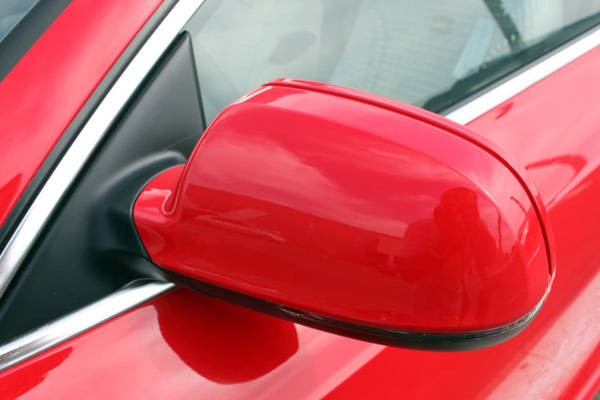
Color difference is a common quality defect in the automotive topcoat industry. Its causes are multifaceted, primarily related to the paint’s raw materials and dyeing process. To detect and control color differences within a reasonable range, a three-angle spectrophotometer can be used. This article describes the application of a three-angle spectrophotometer in automotive topcoat color difference testing.
1. Paint-Inherent Causes: Floating and Bleeding: Floating color is caused by pigments with significantly different densities, which can easily lead to differences in pigment distribution between the upper and lower layers, resulting in inconsistent color between the surface and interior of the coating. Examples include gray paint made with carbon black and titanium dioxide, and light blue paint made with titanium blue and titanium dioxide. Uneven evaporation of the solvent during drying of the wet film creates a difference in surface tension, leading to convection…
The topcoat contains a strong solvent, and the topcoat is applied before the primer is fully dried.
Application Process:
1) Color difference caused by paint floating or paint settling, or uneven stirring.
2) Cross-contamination caused by improperly cleaned spray tools.
3) Paint film thickness is too thin or too thick compared to the standard, or the baking conditions are incorrect.
Three-angle spectrophotometer for testing automotive topcoat
To accurately assess the color variation of automotive topcoats and control the quality of textile products, a three-angle spectrophotometer can be used for testing. The use of a three-angle spectrophotometer makes color processing of automotive topcoats more convenient. We use a three-angle spectrophotometer and a computer color matching system to modify the color of automotive topcoats, thereby reducing color variation between products within the same batch.
The three-angle spectrophotometer can accurately assess the degree of color difference between two products. It automatically compares the color difference between the sample and the inspected product, and then outputs three sets of CIE-LAB data and four sets of color difference data after color comparison: ΔE, ΔL, Δa, and Δb.
The principle behind this approach is to measure the sample’s tristimulus values (x, y, and z) by integrating them, and then calculate parameters such as the sample’s chromaticity coordinates. Typically, a filter is placed over the detector to correct the detector’s relative spectral sensitivity (S(λ)) to the CIE-recommended spectral tristimulus values (x(λ), y(λ), and z(λ). When these three light detectors receive light, the sample’s tristimulus values (X, Y, and Z) can be measured with a single integration. The filter must meet the Luther condition to accurately match the light detector.
Automobile topcoat manufacturers can color automobile topcoats with large color differences based on the data measured by the three-angle spectrophotometer, thereby ensuring product color consistency and reducing corresponding losses.
Three-angle spectrophotometer to find the characteristics of automotive paint formula
1. Simplify the color matching process
2. The perfect choice for color scheme
3. Quickly test twice to get the formula results
4. The interface is intuitive and simple, and the instrument is easy to use
5. Rubber feet prevent the instrument from sliding during reading
6. Small opening, convenient for measuring curved surfaces
7.Can be connected to mobile devices such as mobile phones
8. Three-angle measurement to meet different measurement angle requirements
9. Small size, light weight, easy to carry
10. Using LED light source, long life, no need to replace for ten years
Methods for preventing color difference in automobile paint
1. Strengthen the control of the spraying environment to keep the spraying temperature and humidity within the specified range. The temperature and relative humidity of the spraying room in the paint shop should be controlled within the range of 20-28°C and 60%-75% respectively, so that the factors of temperature and humidity that affect the color difference of the coating are basically eliminated.
2. Strengthen the control of construction technology, strictly control construction parameters, such as spraying distance, paint output, gun speed, fan width, and standardize operating methods, so as to ensure that the coating has no color difference and a uniform thickness of the paint film.
3. Strengthen the control of air pressure and adjust the air pressure valve to keep the spray air pressure within the process range. At the same time, strengthen the daily inspection of process parameters to ensure that the process parameters are within the specified range.
4. Keep the drying temperature within the specified range. Regularly check the drying room’s heating system, circulating air system, ternary system, binary system, key components, etc. to see if there are any problems that affect heating and temperature uniformity. If any problems are found, they should be eliminated in a timely manner.
Future Development of the MS3003 Spectrophotometer
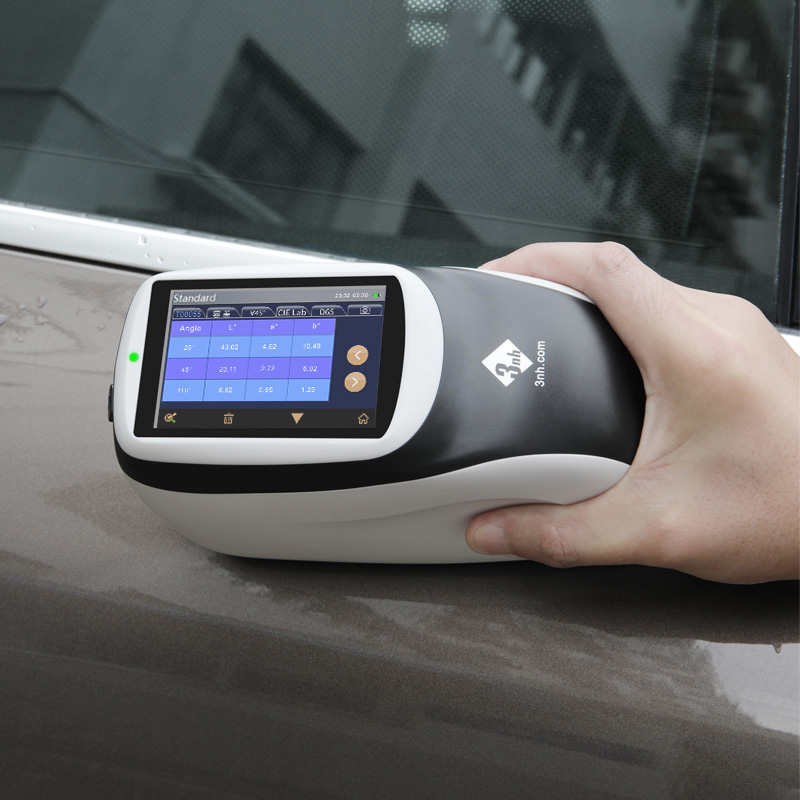
As a common spectrophotometer, the future development of the MS3003 will center on three core directions: precision enhancement, scenario adaptation, and intelligent upgrading, to better meet the increasingly stringent color detection requirements across various industries.
1. In-depth Optimization of Measurement Precision and Stability
- Core component upgrading: In the future, it may be equipped with more sensitive spectral sensors (such as high-resolution CMOS or CCD arrays) to further reduce measurement errors of reflected/transmitted light. This will control the repeatability of color difference values (ΔE*ab) to a lower level (e.g., ≤0.008) while improving detection capabilities for special wavelength bands like ultraviolet and near-infrared.
- Enhanced environmental interference resistance: By optimizing optical structure design (e.g., adding anti-stray light filters) and upgrading automatic temperature and humidity compensation algorithms, the impact of temperature, humidity, and external light on measurement results will be reduced. This ensures stable and consistent data across different scenarios such as factory workshops and laboratories.
2. Vertical Expansion and Customization of Application Scenarios
- Adaptation to segmented fields: For currently covered sectors including plastics, coatings, and textiles, more specialized measurement modes will be developed (e.g., “low-pigment sample mode” for the food industry, “biological tissue color mode” for the medical industry). Meanwhile, it will expand into emerging fields (e.g., color difference detection of new energy materials, color accuracy calibration of electronic screen panels).
- Improved sample compatibility: More flexible measurement accessories will be designed, such as small-diameter probes (≤2mm) for micro-samples (e.g., chip surfaces) and flexible measurement components for irregular curved samples. This solves the inconvenience of existing equipment in measuring samples with special shapes.
3. Intelligent and Digital Function Upgrading
- Integration of automated operations: It will support linkage with production line automation systems (e.g., PLC, MES systems) to realize a fully unmanned process of “automatic sampling – automatic measurement – automatic data upload”, reducing labor costs and human errors.
- Strengthened data management and analysis: Supporting software will be upgraded to add AI-driven color trend analysis functions (e.g., predicting product color drift risks through historical data). It will also support cloud-based data storage and multi-device data synchronization, facilitating collaborative management across departments and regions.
- Optimized interactive experience: A larger touchscreen will be installed to simplify the operation interface, and functions such as voice control and remote operation (e.g., mobile APP connection) will be added to lower the operation threshold for non-professional users.
4. Improvements in Green Design and Portability
- Energy consumption and material optimization: Low-power chips and environmentally friendly shell materials will be adopted to reduce the equipment’s energy consumption during operation (e.g., standby power consumption reduced by over 30%), in line with the global trend of green manufacturing.
- Lightweight design: On the premise of ensuring precision, the equipment’s weight will be reduced (e.g., from the current 3-5kg to less than 2kg) by optimizing the body structure and using lightweight alloy materials. This improves the convenience of mobile measurement and adapts to on-site detection needs.