
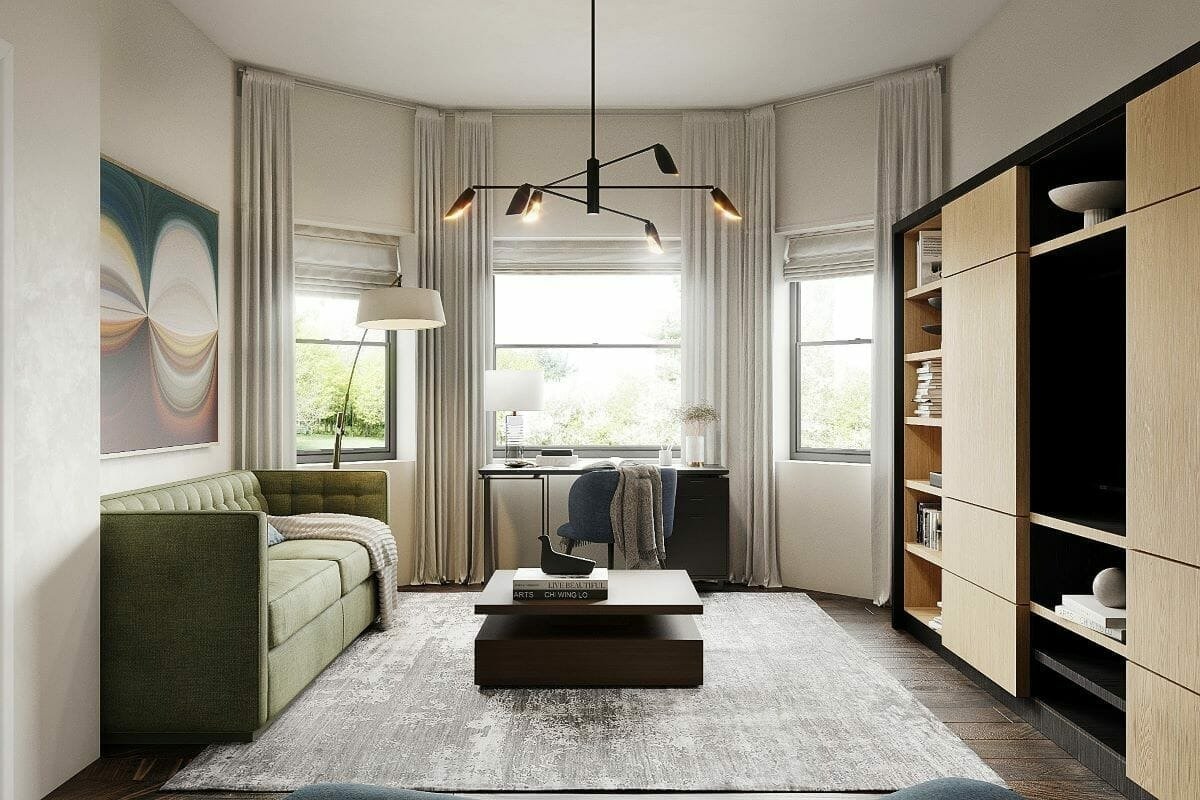
In the architectural landscape of 2026, the traditional “sleep-only” bedroom is becoming a relic of the past. As urban living spaces shrink and the “work-from-anywhere” culture solidifies, our private sanctuaries are being asked to do some heavy lifting. We want a place to dream, but we also need a place to Zoom, a place to stretch, and—if we’re being honest—a place to hide from the rest of the world.
Creating a multi functional bedroom design isn’t just about cramming a desk into a corner and hoping for the best. It is an exercise in logic, spatial psychology, and clever engineering. It is about making a 12×12 room feel like a 5-room penthouse.
In this guide, we will explore how to blend utility with tranquility, ensuring your room remains a place of rest even when it’s pulling double (or triple) duty.
The Logic of Zoning: Dividing Without Walls
The biggest mistake in multi-functional design is “visual bleeding.” This is when your work stress literally spills onto your pillow because your laptop is the last thing you see before closing your eyes.
To make a multi functional bedroom design work, you must create distinct zones. Since you probably can’t build a new wall, you have to use “soft architecture.”
1. The Power of Area Rugs
Rugs are the “land boundaries” of interior design. A plush, high-pile rug under the bed defines the “Rest Zone.” A flat-weave, geometric rug under your desk or yoga mat defines the “Action Zone.” When your feet move from one texture to another, your brain gets a subtle signal that the activity has changed.
2. Vertical Real Estate
In a small room, the floor is precious, but the walls are free. Use tall bookshelves not just for storage, but as room dividers. A bookshelf placed perpendicular to the wall can shield your bed from your workspace, providing a physical and psychological barrier.
3. Lighting as a Divider
Never rely on a single overhead light. Use warm, dimmable bedside lamps for sleeping and cool, bright LED task lighting for your workspace. Changing the light temperature is the fastest way to “reprogram” the room’s purpose.
Smart Furniture: The “Transformers” of the Bedroom
If you want a room that does everything, you need furniture that says, “I can be whatever you want me to be.” Modular and transformative pieces are the backbone of any successful multi functional bedroom design.
- The Murphy Bed 2.0: Forget the clunky, squeaky wall-beds of the 90s. Modern Murphy beds often come with integrated desks or sofas that reveal themselves only when the bed is tucked away.
- Storage Benches: Why just sit when you can hide your winter blankets? A bench at the foot of the bed provides a spot to put on shoes and keeps clutter off the floor.
- Floating Desks: If you only work from home twice a week, a massive mahogany desk is a waste of space. A wall-mounted “drop-leaf” desk can disappear entirely when the workday is done.
The Home Office Integration: Professional but Discreet
We’ve all been there—trying to look professional on a video call while a pile of laundry lurks in the background. Integrating a workspace into a bedroom requires a bit of stealth.
The “Cloffice” (Closet Office) remains a top trend in 2026. By removing the doors of a standard closet and inserting a desktop, you create a dedicated workstation that you can simply “shut away” behind a curtain or sliding door at night.
The Logic: If you can’t see your work, you can’t worry about it. Maintaining that “out of sight, out of mind” boundary is essential for preventing burnout.
Fitness and Wellness: The “Zen” Corner
With more people prioritizing mental health and movement, the bedroom is often the only quiet spot for a yoga mat. However, a treadmill in the bedroom is the ultimate vibe-killer.
How to make it work:
- Foldable Gear: Look for yoga mats that hang on hooks and foldable walking pads that slide under the bed.
- Mirror Magic: A full-length mirror makes the room look bigger, but a “smart mirror” can transform into a personal trainer during your workout and then revert to being a simple piece of decor.
Aesthetics: Keeping the “Bedroom” in the Design
The danger of a multi-functional space is that it starts to look like a cluttered warehouse. To keep it feeling like a sanctuary, you must maintain a cohesive aesthetic.
- Monochromatic Palettes: Using different shades of the same color (like sage green or soft beige) helps visually unify the different zones.
- Hidden Storage: Use beds with built-in drawers. If you can see 50 different items on shelves, your brain perceives “clutter.” If you see 5 clean boxes, your brain perceives “order.”
- Nature’s Touch: Plants are the ultimate multi-taskers. They clean the air, boost your mood, and act as soft visual dividers between your bed and your desk.
Source Insight: According to latest design data from Architectural Digest, 2026 is the year of “Flex-Luxury”—where high-end materials are used in highly adaptable, space-saving furniture.
Common Pitfalls to Avoid
Even with the best intentions, a multi functional bedroom design can go sideways. Avoid these “logic errors”:
- Overcrowding: Just because you can fit a bike, a desk, and a bed doesn’t mean you should. Ensure there is at least a 24-inch walking path between pieces of furniture.
- Cable Chaos: Nothing ruins a high-end design like a “spaghetti pile” of charging cables. Use cable management boxes or furniture with integrated wireless charging.
- Neglecting the Bed: Never sacrifice the quality of your mattress or pillows for the sake of a “cooler” desk. The primary function of a bedroom is still sleep.
Conclusion: Designing for the Real You
Ultimately, a multi functional bedroom design should reflect your actual daily life, not a Pinterest board. If you never exercise at home, don’t force a gym corner. If you prefer working from the kitchen table, don’t build a desk you’ll never use.
By focusing on clever zoning, smart furniture, and intentional lighting, you can create a room that transitions as effortlessly as you do. Your bedroom should be a silent partner that supports your hustle during the day and guards your peace at night.
Trusted Sources & References:
- Architectural Digest: The Evolution of Small Space Design (2026).
- IKEA Life at Home Report 2025: Trends in Multi-Functional Living.
- Environmental Psychology Journal: The Impact of Workspace Visibility on Sleep Quality.
Final Word: A room that does everything shouldn’t feel like a room that’s doing too much. Keep it clean, keep it logical, and most importantly, keep it yours!